





Himalayan Water Partnership
Jun 20, 2026
Current Affair 1:
Himalayan Water Partnership
News:
The Himalayan Water Partnership, launched in Guwahati on June 17, 2026 brings together officials, researchers, community leaders and civil society groups from Arunachal Pradesh, Assam, Manipur, Meghalaya, Mizoram, Nagaland, Sikkim and Tripura.
The platform, facilitated by the Centre for Microfinance & Livelihood, an initiative of Tata Trusts, aims to improve springshed management in the eastern Himalayas, where many rural and peri-urban communities depend on springs for drinking water, irrigation and domestic use.
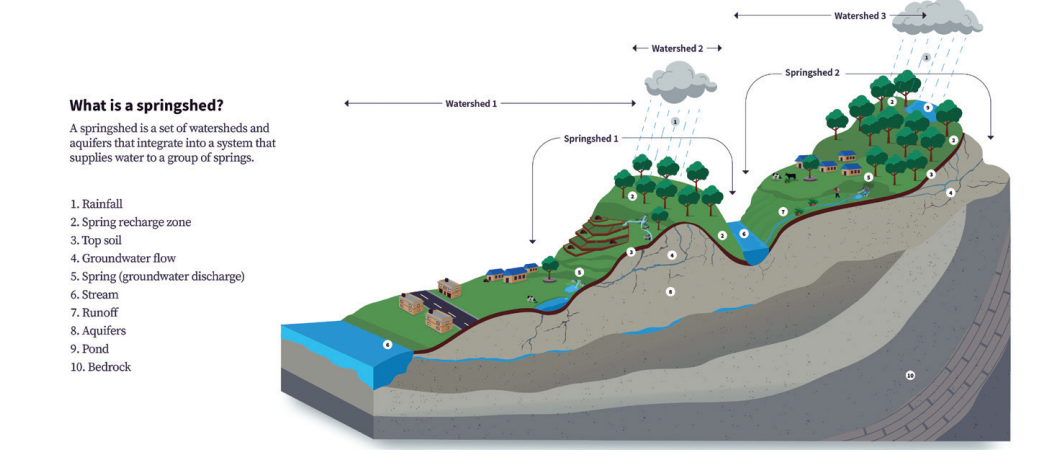
Why are Springs Important?
- The Indian Himalayan Region (IHR) has about 3 million springs.
- These springs provide drinking water and irrigation to more than 50 million people across 12 Himalayan states.
- In many mountain villages, springs are the primary source of freshwater.
Simple Understanding: A spring is a place where underground water (groundwater) naturally comes out on the surface, usually on a hillside or mountain slope.
Why are Springs Drying Up?
- Erratic rainfall due to climate change.
- Deforestation.
- Land degradation.
- Shifting cultivation.
- Ecological disturbances.
- Seismic vulnerability in Himalayan regions.
Result:
- Less rainwater infiltrates into the ground.
- Groundwater recharge decreases.
- Aquifers receive less water.
- Springs gradually dry up.
<< Previous Next >>