





Election Symbols (Reservation and Allotment) Order, 1968
Jun 09, 2026
Current Affair 1:
Election Symbols (Reservation and Allotment) Order, 1968
Election Symbols (Reservation and Allotment) Order, 1968 governs the specification, reservation, choice, and allotment of symbols for elections to Parliament and State Assemblies, as well as the recognition of political parties.
Recognition of Political Parties:
A registered political party is accorded the status of a recognized state or national party as per the criteria listed in ‘The Election Symbols (Reservation and Allotment) Order, 1968’. This order was amended from time to time.
Recognition as a State Party:
For any political party to be eligible for recognition as a State Party in a state, it has to satisfy any of the five conditions listed below.
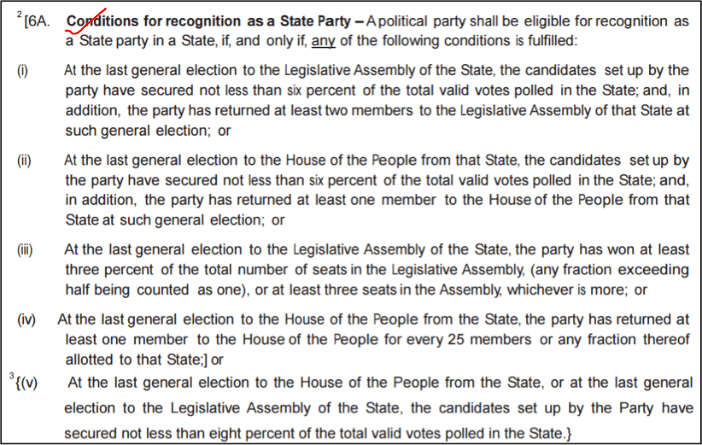
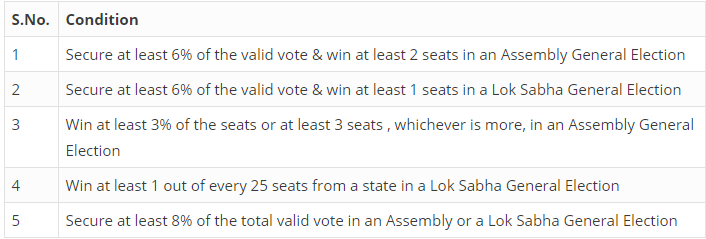
In brief, the five conditions are:
|
|
Recognition as a National Party
For any political party to be eligible for recognition as a National Party, it has to satisfy any of the three conditions listed below.
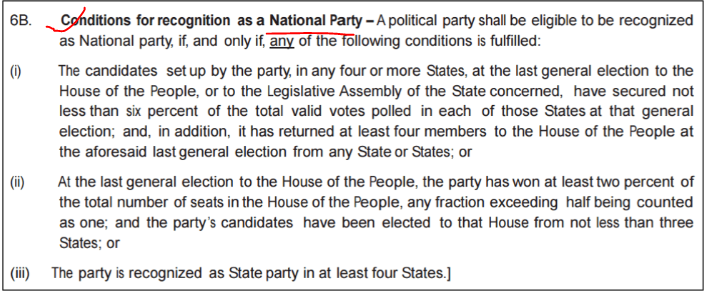
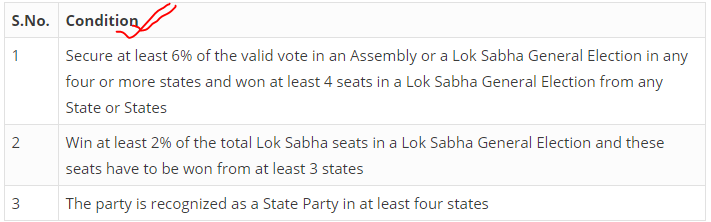
In brief, the three conditions are:
|
|
The allocation of symbols under the Election Symbols (Reservation and Allotment) Order, 1968
Once a political party meets the specific electoral criteria to be recognized as a National Party or a State Party, the ECI allocates them a Reserved Symbol.
- National Parties: A symbol allocated to a National Party (like the Elephant for BSP or Lotus for BJP) is reserved for its exclusive use across all states and Union Territories in India. No other candidate anywhere in the country can use that symbol.
- State Parties: A symbol allocated to a State Party is reserved exclusively for its candidates within that specific state. However, if that same party decides to contest an election in a different state where its symbol is unreserved, it can request the ECI to allow its candidates to use that symbol there, subject to certain conditions.
The Allocation Process for Independent & Unrecognized Candidates (Free Symbols)
For candidates who do not belong to a recognized party, the ECI maintains a dynamic list of Free Symbols (which currently stands at 184 symbols, consisting of ordinary items like a laptop, a matchbox, or a bat). The allocation follows these structural steps:
Step A: The Choice of Three
When an independent candidate or a candidate from an unrecognized registered party files their nomination paper, they are legally required to select three preferences from the ECI’s official list of available free symbols.
Step B: Resolving Conflicts (The Preference Hierarchy)
If two or more candidates pick the exact same free symbol as their first preference in a constituency, the Returning Officer (RO) resolves the conflict using clear statutory rules:
- Unrecognized Registered Parties Over Independents: If one candidate is set up by an unrecognized but registered political party and the other is a pure independent candidate, preference is given to the party candidate.
- The First-Come, First-Served Rule: If both are independent candidates who filed the exact same choice, the RO looks at who submitted their valid nomination paper first.
- The Lottery System (Draw of Lots): If the nomination papers were submitted at the exact same time, the RO conducts a transparent draw of lots to pick the winner. The candidates who miss out are then allocated their second or third choice of symbols.
Suspension or Withdrawal of Allocated Symbols
The ECI does not just allocate symbols; under Paragraph 16A of the 1968 Order, it also possesses the power to suspend or withdraw a party's right to use its symbol.
If a recognized political party deliberately violates the Model Code of Conduct (MCC), refuses to follow the lawful directions of the ECI, or fails to file its mandatory election expenditure reports, the ECI can pull back or freeze its reserved symbol as a strong punitive action.
<< Previous Next >>